An air conditioning drainage water leak usually happens when the AC cannot drain condensation the right way. In most cases, the problem comes from a blocked condensate drain line, a dirty filter that leads to coil freezing, a damaged drain pan, or poor drainage inside the unit. In Dubai, this issue can happen more often because AC systems run for long hours, humidity increases condensation, and dust can clog the drainage system faster.
A small AC water leak may not look serious at first. You may only see a little dripping from the indoor unit or a damp patch near the wall. But if the cause is ignored, the leak can get worse. Water may spread to paint, ceilings, cabinets, wooden flooring, or nearby furniture. In some cases, the AC may also stop cooling properly.
That is why it helps to understand why AC drainage water leaks happen, what signs to look for, and when the problem needs professional repair. In a place like Dubai, where air conditioning is part of daily life, a drainage problem should not be left for too long.
What an AC Drainage Water Leak Actually Means
Your air conditioner removes moisture from indoor air while it cools the room. That moisture turns into condensation. The water then collects in the drain pan and should move out through the condensate drain line.
When everything is working properly, this process happens quietly in the background. Most people never think about it. But if the drainage path is blocked, the pan is damaged, the unit is not level, or the system starts freezing and thawing, water may no longer drain as it should. Instead, it may leak from the indoor unit or overflow into the surrounding area.
That is what people usually mean when they talk about an air conditioning drainage water leak.
Why AC Water Leaks Are Common in Dubai
Dubai conditions can make this issue more common than people expect. Air conditioners here often run for long hours, especially during warmer months. The more the unit runs, the more condensation it produces.
Dust is another major factor. Fine dust can build up inside the system over time. When dirt mixes with moisture, it can affect drainage areas and make blockages more likely.
Humidity can also add pressure to the system. If the indoor air holds more moisture, the AC may have to remove more water than usual. That makes proper drainage even more important. If the drainage system is already weak, dirty, or partly blocked, the extra condensation can expose the problem much faster.
This is why AC water leaks in Dubai are not just random faults. They often come from a mix of heavy AC use, dust buildup, and delayed maintenance.
The Most Common Causes of an AC Drainage Water Leak
There is not just one reason an AC starts leaking water. Several problems can lead to the same result.
Clogged Condensate Drain Line
This is one of the most common causes. The condensate drain line carries water away from the indoor unit. Over time, dust, dirt, algae, and slime can build up inside it. When the line gets clogged, water has nowhere to go. It backs up and may start leaking from the unit.
In many homes, this begins as a small drip and slowly gets worse.
Dirty Air Filter
A dirty air filter can restrict airflow. When airflow drops too much, the evaporator coil may become too cold and start freezing. Later, when the ice melts, the extra water may overwhelm the drain system and leak out.
A lot of people do not connect a dirty filter with water leakage, but it is a common chain reaction.
Frozen Evaporator Coil
Frozen coils can happen because of airflow problems, dirty filters, low refrigerant, or other cooling issues. When the frozen coil thaws, it releases more water at once. If the system is not draining properly, that water may leak from the indoor unit.
Damaged or Rusted Drain Pan
The drain pan is meant to collect condensation before it moves into the drain line. If the pan is cracked, damaged, or badly rusted, water may leak before it ever reaches the drain pipe.
Older systems are more likely to have this problem, but it can also happen if the pan has been under stress for too long.
Improper Installation or Poor Unit Level
If the indoor unit is not installed at the correct angle, the water may not flow naturally toward the drain outlet. Instead, it may sit in the wrong part of the tray and eventually spill over.
This kind of problem can also appear later if the unit shifts slightly over time.
Condensate Pump Failure
Some AC systems use a condensate pump to move water out of the unit. If that pump fails, water may collect and start leaking. This is not present in every setup, but where a pump is used, it becomes an important part of the drainage system.
Signs Your AC Drainage System Has a Problem
Not every drainage issue starts with a heavy leak. Many give smaller warning signs first.
Water Dripping From the Indoor Unit
This is the most obvious sign. Even a small drip means something in the drainage system may not be working properly.
Damp Wall or Ceiling Marks
If the AC is installed near a wall or ceiling and you notice dampness, stains, peeling paint, or wet patches, the leak may already be spreading beyond the unit itself.
Musty Smell Near the Unit
A stale or damp smell may mean moisture is collecting where it should not. This does not always prove a drain leak, but it can be a sign that water is sitting in the system too long.
Weak Cooling With Water Leakage
If the AC is both leaking water and cooling poorly, the issue may involve more than just drainage. A frozen coil, dirty filter, or airflow problem may be part of the cause.
Repeated Leaks After Basic Cleaning
If the leak keeps coming back even after a simple check or cleaning, the problem may be deeper and need proper inspection.
What You Can Safely Check First
Some basic checks are safe to do before calling a technician. The goal is not to carry out a full repair yourself. It is simply to spot obvious issues and reduce damage.
Turn the Unit Off
If the AC is actively leaking, switch it off first. This helps stop more water from building up and reduces the chance of damage around the area.
Check the Air Filter
If the filter is easy to access, take a look. If it is heavily blocked with dust, that may be contributing to poor airflow and coil freezing.
Look for Visible Water Around the Drain Area
If you can safely see the drain pipe or nearby area, check for obvious overflow or standing water.
Protect Furniture and Flooring
Move nearby items away from the leak. Put a towel, tray, or bucket under the drip if needed to reduce immediate damage.
Do Not Force the Unit to Keep Running
Many people keep restarting the AC, hoping the leak will stop. Usually it does not. It is better to keep the unit off until the cause is checked.
What You Should Not Try Yourself
Some problems may look simple from the outside, but DIY repair is not always the right idea.
Do not:
-
open electrical sections of the unit
-
try to force tools into hidden drain areas
-
ignore a burning smell or spark
-
keep using the AC while water is spreading
-
assume the issue is fixed just because the leak stopped for a short time
Some minor checks are fine. But repeated leaks, hidden water damage, frozen coils, and electrical concerns should be left to a qualified technician.
How Professionals Fix an AC Drainage Water Leak
A proper repair should not only stop the visible leak. It should find the actual reason the water is escaping.
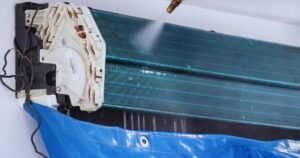
Drain Line Inspection and Cleaning
If the condensate line is blocked, the technician will inspect and clear it properly. This is often the first step when dealing with drainage leaks.
Filter and Airflow Check
The technician may check whether poor airflow is causing the evaporator coil to freeze. If the filter is dirty, it may need cleaning or replacement.
Coil Inspection
If the coil is freezing or already covered in ice, that needs attention. Otherwise, the leak may come back again after the ice melts.
Drain Pan Condition
The pan should be checked for cracks, rust, poor alignment, or overflow marks.
Unit Level and Installation Check
If the indoor unit is not draining at the correct angle, that may need adjustment.
Condensate Pump Check
Where a pump is part of the system, it should be checked to make sure it is working properly.
A good repair is about solving the cause, not only drying the area.
How to Help Prevent Future Leaks
AC drainage leaks are not always fully preventable, but regular care can reduce the chance of them happening.
Clean or Replace Filters on Time
A blocked filter can start a chain of problems that leads to leakage. Keeping the filter clean is one of the easiest preventive steps.
Schedule Regular AC Maintenance
Routine AC service helps catch drain line buildup, weak airflow, coil dirt, and early drainage issues before they turn into bigger faults.
Get the Drain Line Checked Periodically
If your AC runs heavily for long hours, the drain line should not be forgotten. It is a small part, but it plays a big role in keeping the unit dry and stable.
Pay Attention to Small Signs
A little water drip, weak cooling, or a musty smell should not be ignored. Small warning signs are often easier to deal with than bigger water leaks later.
Do Not Delay Repeated Problems
If the unit has leaked before, treat that seriously. A repeated leak usually means the original issue was not fully solved.
Why Early Action Matters
Many property owners wait because the leak looks small. But water has a way of spreading quietly. What begins as a few drops can turn into damp walls, ceiling stains, damaged cabinets, or warped flooring.
In apartments, villas, and offices, water leakage can also affect the look and condition of the property. That is why acting early usually saves more stress than waiting.
The earlier the system is checked, the easier it is to stop the problem before damage grows.
A Professional and Trustworthy Way to Handle It
A good blog on this topic should stay practical and honest. Not every leak means a major disaster. But not every leak is harmless either.
The right approach is simple:
-
understand the common causes
-
watch for the signs
-
take safe first steps
-
get professional help when the issue goes beyond a basic check
That kind of guidance builds more trust than fear-based writing.
If this article is for Masterminds HVAC, the brand should be mentioned naturally. The focus should stay on helping the reader understand why an AC water leak happens and when proper drainage repair is needed. Once the article gives clear value, the service message becomes much stronger.
Conclusion
An air conditioning drainage water leak usually points to a problem in the way the AC is handling condensation. The cause may be a clogged condensate drain line, dirty filter, frozen evaporator coil, damaged drain pan, poor installation angle, or pump-related issue.
In Dubai, where AC systems run heavily and deal with dust and humidity, these leaks can show up more often if maintenance is delayed. That is why it helps to take even a small leak seriously.
If your AC is dripping water, leaving damp marks, smelling musty, or leaking again and again, it is better to get the drainage system checked early. A timely repair can protect the unit, reduce water damage risk, and help keep your indoor comfort steady.